How to Get the Perfect Profile by Sledging Plaster Ceramic Arts Network

Kilns and Firing
When dirt is fired with a well paired glaze to maturity temperature, they become durable ceramics. Variables which touch on the appearance of ceramics and the overall studio practice of a ceramicist include: clay trunk, glaze, type of kiln, type of fuel, kiln loading way, and kiln program. Typical kilns for firing ceramics include an electric kiln, a gas kiln, a wood kiln and a Raku kiln. The pick of a kiln type, and the firing method have a significant issue on the terminal result.
Electric Kiln Firing
There are several different types of kilns and ways of firing, but all kilns have some basic elements in mutual: a estrus source, a highly insulated refractory structure, and a way of controlling air intake. The just exceptions include traditional ways of firing at low temperatures in the basis with plant materials from the environment, such as in pit firing. The kiln is loaded by creating a construction of kiln piece of furniture known as shelves and posts . The post-obit are the near common types of kiln firings today.
Electric kilns are the nigh common blazon of kiln used today in Finland. Electric kilns are manufactured in different sizes, are very reliable, considerably more than sustainable, and crave very niggling noesis of firing scientific discipline. These factors make them very pop with all ceramicists from hobbyists to scientists and to professional person potters. With what they lack is the realm of multifariousness and surprises that atmospheric firing brings, such as gas reduction, wood firing, or raku. Electric kilns are quite straightforward and easy to use, requiring far less time, manual labor, and maintenance.
Electrical ceramic kilns are very uncomplicated - they are metallic boxes, either square or round and front-loading or top-loading, lined with soft, porous, highly insulating bricks. Electric kilns are powered past electricity which passes through metallic coils called elements forth the interior walls. These elements are the most frequent piece of an electric kiln requiring maintenance and demand to be changed every so often.
The 2d virtually common maintenance involves the kiln shelves. The shelves should be covered with kiln wash to be protected from glaze drips. After several firings, the kiln wash starts to flake and chip. This old layer of kiln wash should be scraped and reapplied or patched.
Kiln Programming and Loading
Electric kilns are either fired manually or with an electronic control pad. Modern electric kilns with electric command pads can command each stage of a kiln program, including cooling, accurately.
The firing plan is divided into stages in which the rate of increase of the kiln temperature is adapted in each stage, so that the objects stacked in the kiln can withstand the temperature rise without breaking. The principle is that the temperature is raised more slowly at the beginning of the firing and the heating rate can be increased gradually, as the temperature in the kiln rises high enough (and has passed both cristobalite and quartz inversion). A typical ceramic firing involves 2 – three steps and a final soaking. The soaking means that the final temperature is reached and maintained in the end for a set amount of fourth dimension. This allows the temperature in the kiln to stabilize, the objects in the kiln have time to all reach the desired temperature and the chemic reactions during firing have time to have place. Kiln manufacturers too recommended that information technology's better to slow downwardly the firing a bit before reaching the final temperature so that the firing results volition exist more even, and the heating elements last a much longer time, as seen in the high fire glaze plan below.
Some very basic examples of ceramic firing programs.
Bisque firing:
Stage 1: fifty °C/h until 250 °C
Stage 2: 100 °C/h until 600 °C,
Phase 3: 200 °C/h until 900 °C.
Depression glaze firing:
Stage one: 100 °C/h until 250 °C,
Stage 2: 150 °C/h until 600 °C,
Stage 3: 200 °C/h until 1020 °C.
Soaking: 10–20 min.
Loftier glaze firing:
Stage 1: 100 °C/h until 250 °C,
Stage ii: 150 °C/h until 600, °C,
Phase 3: FULL until 1100 °C,
Stage 4: 150°C/h until 1200–1250 °C.
Soaking: 10–20 min.
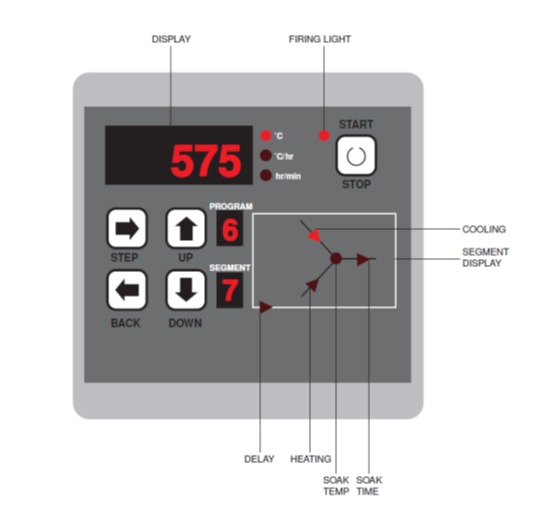
Figure 1. Kiln control pad past Stafford Instruments for Kerako Kilns. Most mutual at Aalto Academy. The epitome shows the basic push functions.
Kiln loading structure and rubber
Figure two: Electric kiln loading procedure.
1. Kiln type: Kerako electric kiln top-loading model.
2. The kiln can exist loaded when it is room temperature, or absurd enough to load safely.
iii. The heating elements line in rows within the kiln, and there should be no debris or shards on them or other damage.
4. Iii very brusk posts are placed on the very base of the kiln before any shelves.
five. The first shelf is ready on superlative of them, and and so in the following layers, the posts are placed exactly "in the same spot" as in the layer below. The posts should be placed earlier whatsoever ceramic pieces.
vi. Pieces of like superlative should be placed on each level, maximizing the efficient kiln loading.
seven – 9. The structure of iii posts is repeated with each new shelf layer until the kiln is full.
ten. Before closing the lid, make sure none of the pieces are too high or they will be crushed.
11. Close chapeau, check programme and start kiln. Make sure at that place are no flammable materials in the kiln.
When loading a kiln, first cheque that there is no visible damage to the kiln, such as ceramic pieces or glaze from previous firings in the kiln heating elements (metal coils). If at that place are a lot of loose pieces in the grooves supporting the elements or on the bottom of the kiln, you should remove the pieces or vacuum the kiln before use. The kiln should exist cleaned each time after use to foreclose random debris from falling on glaze pieces and to go on the kiln firing accurately.
Earlier loading the kiln, make sure that the kiln equipment or furniture you lot demand (shelves and posts) are intact and free of coat residues or visible damage. The elevation surface of the kiln shelves and the ends of the posts are treated with a kiln-wash , which protects and prevents glaze from sticking to the kiln shelf and facilitates the cleaning of the kiln shelves. Kiln-wash commonly consists of half Kaolin and half Alumina Oxide, basically a paintable refractory coating, mixed with water to the consistency of a glaze. The kiln-done shelves should always be dry before using them in the kiln. 1 should be conscientious of flaking kiln wash, as information technology tin come off in the kiln and fuse to a glazed piece, leaving an unattractive blob. The kiln equipment and furniture are fabricated of a highly refractory material, but is very fragile, then handle them with intendance.
Never wipe the kiln shelves with blank hands, every bit it is common for broken pieces to become sharp and glass-like on the surface. It is best to grind off any glaze drips or stuck pieces with a grindstone. Protective gloves, goggles and respirator should be worn when grinding kiln shelves to protect eyes and pare from ceramic shards and avoiding animate grit.
The goal is always to fire the kiln as full and efficiently as possible. When loaded to total capacity, the kiln firing uses less energy, and the temperature is more even throughout the kiln.
The kiln is loaded with a repeated structure of layers to optimize space and firing accurateness. The stacking pattern is started by placing three support posts on the bottom of the kiln that volition line upward with the border of the kiln shelf placed on acme and create a stable base. On the next layer, the 3 support posts are placed at the aforementioned points on the shelf. The same pattern of posts betwixt shelves continues each layer to create a strong and consequent weight-bearing structure throughout the kiln stacks.
Objects in the kiln must not touch any part of the kiln, including the elements, posts or kiln walls. For a bisque firing, objects may be advisedly nested or stacked. Merely objects in a glaze firing should never affect or they will fuze together. After loading the kiln, make sure that the kiln lid or door can be closed without touching the objects.
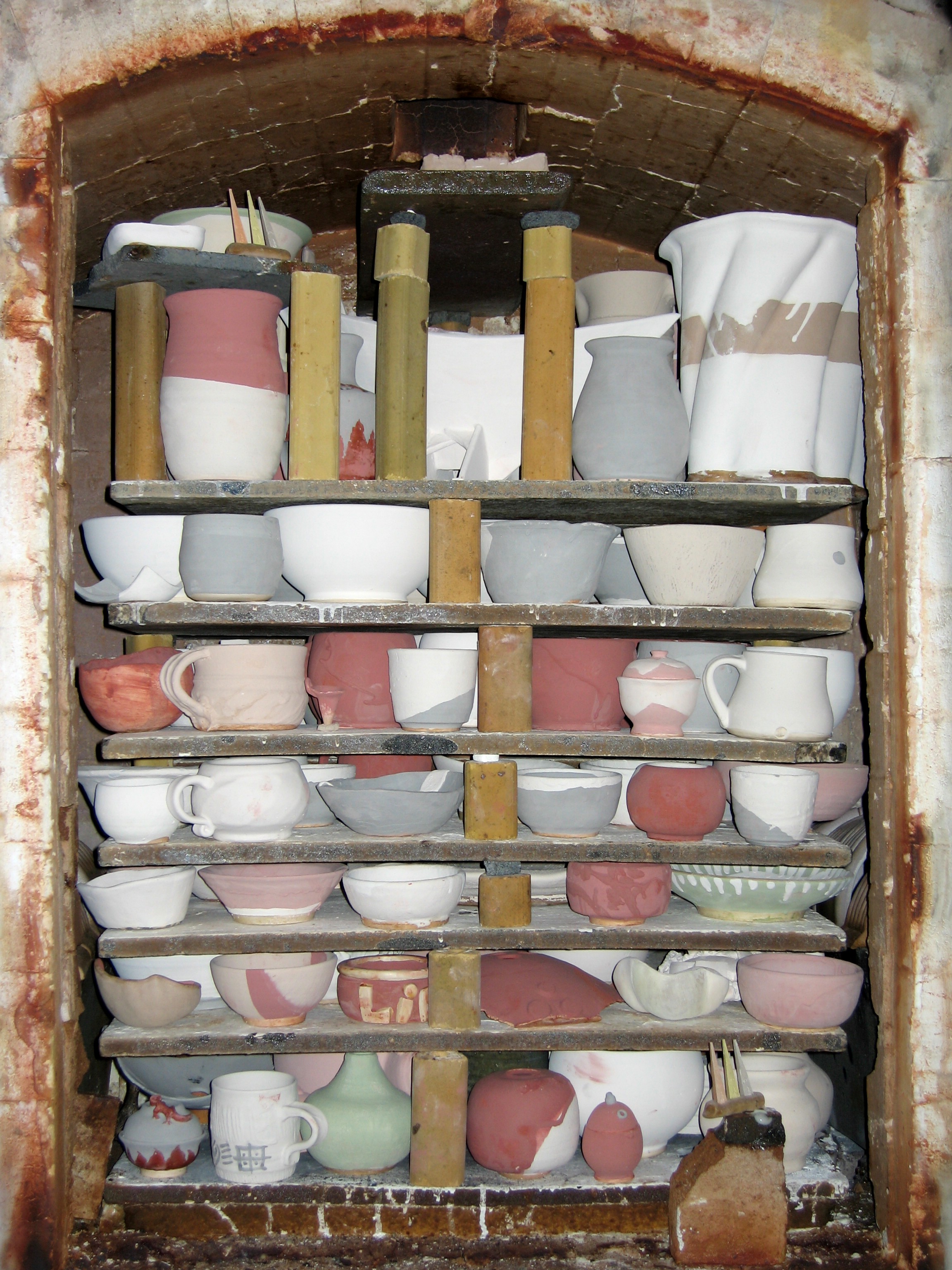
Effigy 3. Fully packed gas kiln before firing with cone packs at the top left and lesser correct.
Important stages of firing and temperatures
Below is a brief outline of important firing temperatures and the chemical changes that are happening to ceramics during the process of heating and cooling. These steps and benchmarks should be kept in mind when creating kiln programs to burn down to the correct temperature, to not burn down at too fast a rate through major chemical changes, and to cool a kiln boring enough so every bit non to crusade thermal shock and smashing. For additional information please refer to From Clay to Ceramic and Ceramic Firing, section of the Ceramic Handbook.
Basic firing ranges .
Call back always to check the info on the dirt-handbag for the correct temperature for your specific clay body.
Low burn Earthenware, 950 – 1100 °C, cones 015 – 1, cone 04 boilerplate
Mid-range Stoneware, 1162–1240 °C, cones two–7, cone six average
Loftier-burn down Loftier fire stoneware, porcelain, 1263–1326 °C, cones 10 –13
Temperature Stage of Firing
100 °C Water boils causing moisture light-green-ware to explode (if temperature rises likewise suddenly)
220 °C During cooling if cristobalite crystals are present in clay they rapidly compress (3%) potentially cracking ware.
350–500 °C Permanent dehydration of clay occurs. Clay is Chemically changed.
573 °C Quartz inversion happens causing quartz in clay and glazes to expand when heating and contract during cooling.
600–900 °C Organic and inorganic matter is burned off out of clay.
1100 °C Mullite crystals begin forming in porcelain clays.
(Zakin & Bartolovic, 2015)
Other Equipment and Tools
Clay grooming and product
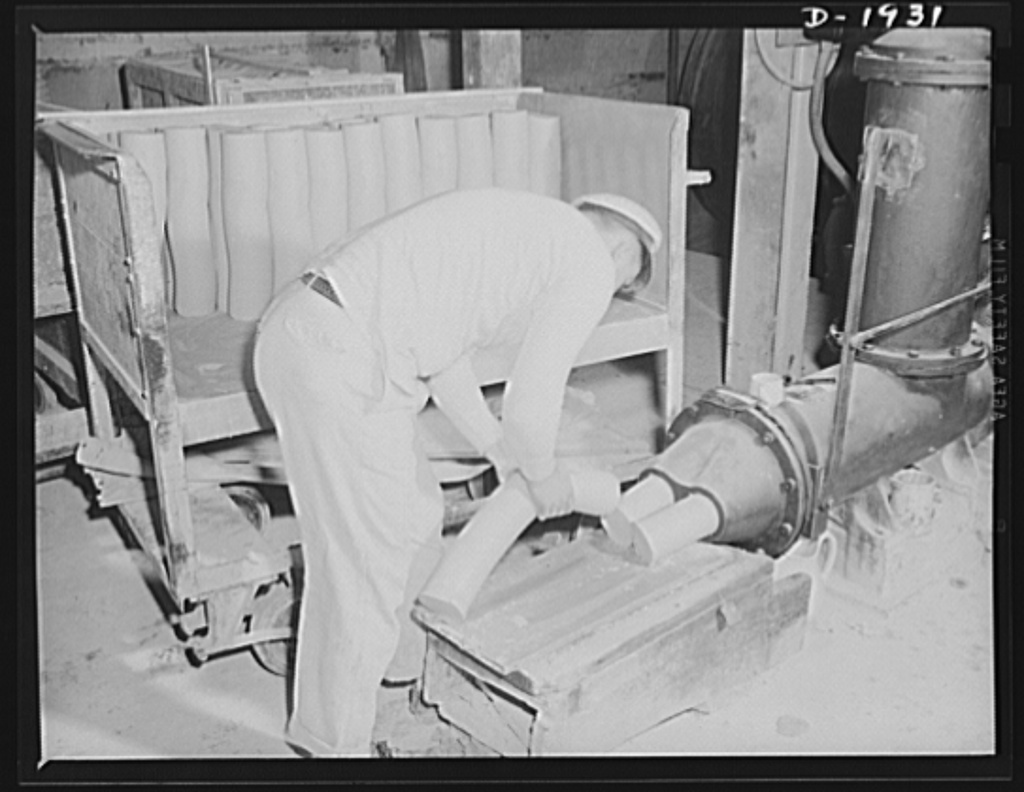
Figure 7. Pug mill.
Pug mill
A machine used for mixing and recycling clay. In 1 chamber with a rotating mixing head the textile is added which is and so compressed and extruded out of the end into processed dirt logs. It is a very efficient machine for recycling and reusing dirt waste of various stages of dryness or wetness.
Extruder
A tool that passes dirt through a tube to grade coils, often uses dissimilar shaped dies to create unlike profiles of the extrusion. It consists of a metallic tube fastened to the wall, in which the clay is put. The desired profile of extrusion should match the dice in the bottom of the metal tube. A metal arm is attached to a metallic circle which fits into the tube and using leverage, pushes the dirt though the die. The resulting extrusion can be either solid or hollow and creates a very strong and compressed course.
Slab roller
Tabular array with a horizontal cylinder with adjustable pinnacle fastened to a big bicycle, which when cranked, moves the cylinder beyond the table and dirt evenly. The slab roller presses and squeezes clay betwixt 2 sheets of canvas creating an equally flat piece of dirt. Often, different pieces of canvas are used for different colors of clay. It is the more efficient and accurate version of a rolling pin and resembles the design of a bones printing press.
Pottery wheel
A pottery bicycle is a spinning horizontal circular piece of metal (or other material) fastened to an axis that is controlled and spun by either electricity or manual power. Electric wheels can ofttimes spin clockwise or counter-clockwise and the speed is controlled by a pedal. Most wheels have a splash pan, which collects backlog water and clay from the bicycle-throwing. There are likewise kick-wheels, which have another larger rotating wheel fastened to the primary axis instead of a motor that is literally kicked by the thrower to gain momentum and spin. A treadle wheel is a design i pace up from a kicking cycle that uses a sort of swinging pedal which acts as a crank to maintain spinning speed of the bike. Peculiarly in Asia, traditional pottery wheels can be found that are spun instead with a stick and are often very low to the ground, assuasive the potter to sit on the flooring.
Slip-mixer
A slip-mixer is a tank that includes a drill used for mixing and dispensing casting slip. The level of complexity varies, some include: a hose with nozzle and pump to dispense sideslip and a timer for mixing and agitating. These more than complex slip-mixers are about common in studios or factories with high production.
Jigger
A jigger is a bicycle used for series production of forms using plastic dirt. A concave or a convex plaster mold is held in place and spun on the wheel with a piece of clay within. So a retractable arm is lowered with the corresponding interior or exterior shape cutting into a profile tool. The profile both compresses, trims, and shapes the plastic dirt. When the arm and profile tool are pressed downwards all the style, the desired course should be made. Jollying is the term used when the arm forms the concave interior shape, and jiggering when the convex exterior shape is formed. Using a jigger is still used as a means of producing circular functional ceramics in high volumes and has the advantage of using a wider diversity of clay bodies versus skid-casting.
Glaze preparation and glazing equipment
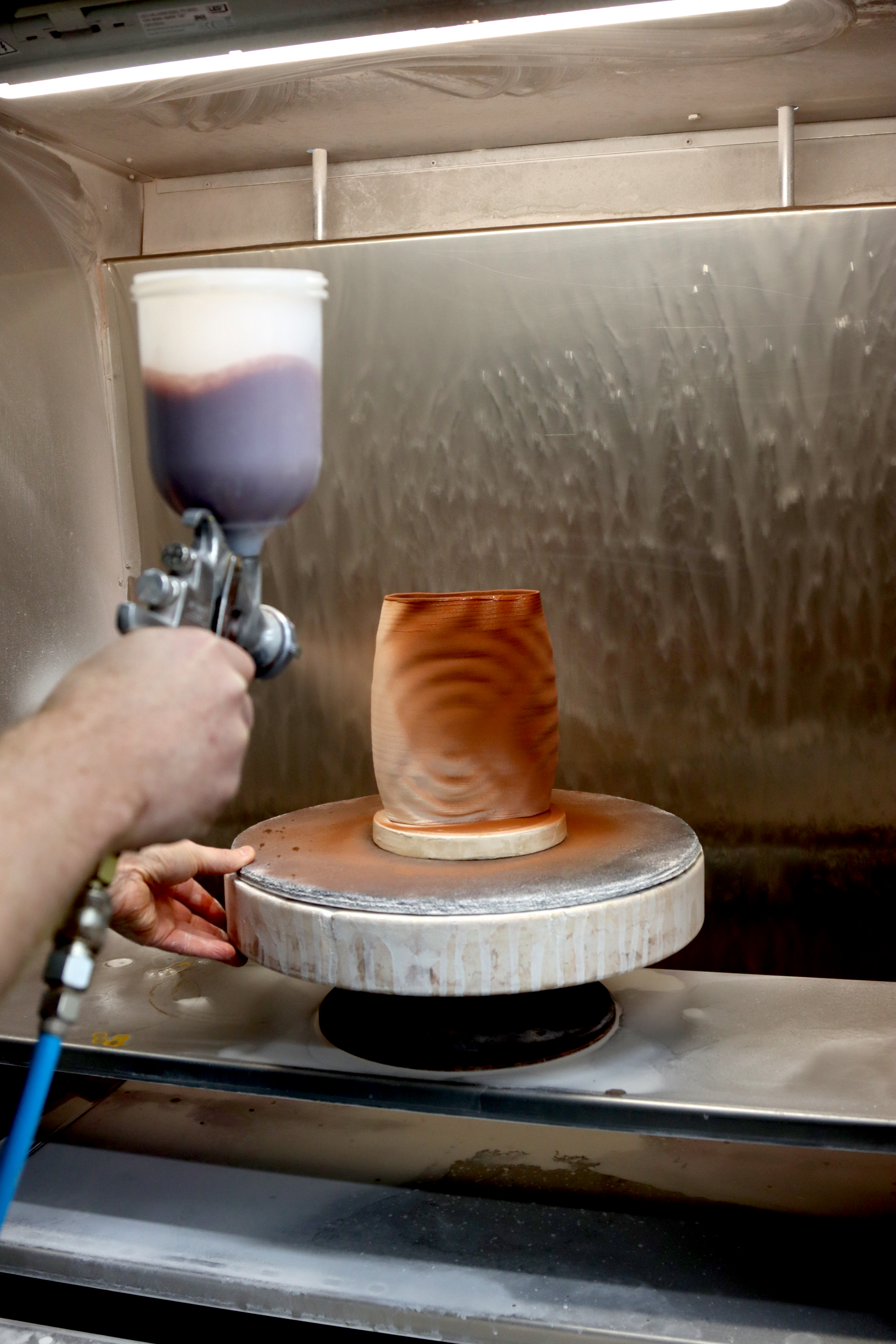
Figure 8. Spray berth.
Spray booth
A spray booth uses a spray-gun for coat application. Glaze and compressed air are fed from the tank to the nozzle of the gun, after which a layer of coat is sprayed on the surface of the object. It is of import to spray in a glass cabinet to prevent glaze dust from spreading into the room air. There is also a manual low-tech version which uses a pocket-sized metal container and the user's own breath bravado through a tube to spray glaze on a modest-scale product level.
Ball mill
Brawl mills are used for grinding minerals, oxides, glazes, colors, or for making terra sigillata. The machine usually consists of h2o-tight ceramic jars with small ceramic balls inside, which when continuously rolled, manufactory or grind the material into smaller particles, leaving very fine materials in the end.
Plaster modeling
Plaster bicycle
A plaster bike resembles a pottery wheel but is usually college, used standing or sitting, also depending on whether it is a purely electrical or a kick-cycle. It is used for making plaster models or prototypes and round molds. Plaster is bandage vertically on a wheel caput and left to fix to semi-soft or fully fix to be formed, carved, and worked. If the plaster is turned when it is still semi-soft, often a profile tool is used to sledge or smear the plaster into shape in the beginning and so refined as it hardens. The plaster tin also be tooled free-form with sharp, long handled carving tools, usually aided past a horizontal bar between the user and the wheel for resting the tool or arm for added control. Unlike plaster traditions vary from dissimilar places, such as in the U.South., Europe, and Asia. The arrangement property the plaster piece on the wheel varies, such every bit casting a thickness of plaster on the wheel caput and using a primal system similar to mold keys to avoid having the model come loose spinning. Or some wheels have a dissever metal piece that can be screwed in and inverse based on the height of the model to act as a sturdy and stabilizing core.
Plaster lathe
A plaster lathe works simply similar a wood lathe, where a solid cylinder of plaster is clamped horizontally and spun to be carved and tooled. The plaster must be difficult, but fine accuracy can be achieved and objects that are taller are often better executed on a plaster lathe than a plaster wheel.
Safety and sustainability
There are both obvious and unseen, firsthand, and long-term aspects that are dangerous within the ceramics working expanse. These include situations involving kilns, dirt and glazes, plaster, and studio equipment.
One must be aware of these risks before working in the studio in consideration with their own well-beingness and the safety of others. Above all, the wellness of an individual relies on the facilities remaining maintained, organized, clean, and used by considerate and informed users.
Health and Safety
Kilns
Kilns are large industrial ovens that become very hot. Earlier touching a kiln, y'all should look at the temperature to know whether it is appropriate or safe to open up it or touch it. When a kiln is cooling it can be propped open at 300 °C and opened at 200 °C. The objects tin can exist taken out of the kiln only afterward it is rubber. One should always be especially mindful of the kiln user and consult their wishes for cooling before opening a kiln.
Estrus and PPE (personal protection equipment)
The kilns are insulated with soft bricks, but every bit the kilns are fired betwixt 800 – 1300 °C, the metal outside surface of the kiln nonetheless becomes very hot. Before a kiln is started, always brand sure nothing is left on top or nearby that could grab burn, such as a wooden lath used to behave work. When opening a hot kiln, unloading work and shelves, one should always apply special rut refractory gloves. When glaze melts to the kiln shelf or a piece is broken, one should be very careful to also use gloves for cleaning, as the glaze and ceramic pieces get abrupt similar glass. When cleaning the kiln shelves, also protective eyewear and respirator is needed.
Kilns should always be cleaned subsequently utilise. If in that location is an mistake or some equipment cleaved, it should be reported to the kiln principal, addressed, and restored in a timely manner. All experimental firings, for instance containing organic fabric, need to be discussed with the ceramic studio master or carefully planned, equally they can cause unsafe smoke, fumes, or harm to the equipment.
Hazardous kiln gases
Firing with salt creates hydrochloric acrid, which is poisonous. It should not be used indoors, and if firing a salt kiln exterior, the area should be vacated later inserting the table salt into the kiln. In contempo decades, soda (sodium bicarbonate or normally known as blistering soda) has been used as an alternative, producing its own unique effects.
All kiln firings create harmful fumes containing carbon monoxide, sulphur dioxide and fluorine compounds. Kilns should ever be in a separate room from the studio and well ventilated.
(Health & Safety, n.d.)
Interview with Keracomp
The following is an interview with Kimmo Lattu of the company Keracomp about kiln guidelines, safety, and regulations. Keracomp was founded in 1974 in Porvoo, Republic of finland first to manufacture kilns for schools and smaller ceramic companies and now has widened its scope to develop also dissimilar kinds of heating equipment and other kinds of ceramics equipment (Keracomp OY, 2020). Their products and relevant equipment information can exist institute on their website: https://keracomp.fi/
i. What are hazardous kiln situations to be avoided for personal safety?
Actual hazards can be created in two ways.
Firstly, open up the hot kiln without suitable protection. For this reason, the instructions for kilns recommend a certain temperature limit, which must be met before opening the kiln (of course this also affects the durability of the kiln structures and objects).
Secondly, interference with electric installations. Equally with all electrical equipment, changes can lead to a situation where the danger to life is imminent only also to a situation where the danger does not materialize until years later.
2. What are the means to avert equipment deterioration?
Careful piece of work and immediate cleaning are key aspects. That is, the user needs to know what materials are put in the kiln, and how they behave at a certain temperature. This avoids breakdowns of objects, glaze spills, which ever strain the kiln and kiln equipment equally well.
If and when something breaks down in the oven, it is important to make clean all the splinters and splashes out of the kiln, for case by vacuuming. If something has melted on the within of the kiln, you should remove it even if it breaks the brick surface. For case, a glaze baste melts a piffling deeper into a brick in every firing. And a blood-red clay fleck between the elements will cook across the element in the next high firing.
Another issue is the control of h2o vapor released from objects. Information technology is good to get h2o vapor directly out of the kiln, since as it passes through the structure it condenses on cooler metal surfaces and promotes their corrosion.
3. With electric kilns, how ofttimes are the elements changed and how do you know?
According to the need. Visually, the all-time ways of assessment is a change in the shape of the element curlicue. The element in the groove starts to fall, the loops rest against each other and the chemical element starts to hang and/or accumulate in a tight bundle. Following the process, a strong symptom of the need to replace resistors is a clear prolongation of glazing firing; as information technology ages, the power of the resistors decreases, increasing the duration of combustion. For industrial apply, controllers are available that monitor the power of the resistor groups and warn the user when a sure limit value is exceeded.
four. Are there articulate laws in Republic of finland for where a kiln can be installed?
No. The matter is mainly regulated by three factors.
The kiln manufacturer/importer must land the environs in which the oven may be installed. This must be taken into account, for example safety distances for burn down safety. This is included in the requirements for the CE mark of the appliances and tin be found in the kiln'south operating instructions and from the manufacturer/importer.
From a construction engineering point of view, the information provided by the kiln manufacturer is indicative and the construction manufacture has its own practices and regulations for resolving issues related to materials and edifice services.
The regulation of ventilation in buildings and workspaces once more sets its ain requirements, and these methods are typically chosen co-ordinate to the use of the space in proportion to the number of people using the space. In public spaces, ceramic kilns are often required to be ventilated separately.
5. Are there specific regulations for ventilation for different kilns?
At that place are not. From the bespeak of view of the ventilation of the room, the purity/impurity of the air released into the room and the heat load released from the furnace are essential. As I mentioned higher up, ceramic kilns oftentimes accept their own belch channel, merely the dimensioning issue is always dependent on the whole.
6. How does kiln loading touch on a firing?
Vitally. Even stacking is a prerequisite for even temperature distribution. The mass of the objects to be loaded into the oven should be distributed as evenly as possible inside the kiln. In do, even if the kiln is not filled but the firing is forced to start, the kiln should be filled with extra kiln article of furniture so that the objects are evenly distributed effectually the kiln. The goal in this case is therefore non that the kiln is loaded every bit tightly as possible, but the stacking as evenly equally possible, as the extra infinite merely takes upward energy unnecessarily.
vii. Is it more sustainable to work in depression-fire materials?
Yes. Depression combustion temperatures have several advantages. The energy savings are obvious, just at least as of import is the extension of the life span of the kiln construction and elements. This is of cracking importance when you lot consider that the production of kiln materials has already required quite a lot of energy. It can exist compared to a car, for example, if the motorcar is always driven as hard as information technology can be, emissions and maintenance costs are high and service life is brusk.
8. Is it more sustainable to use electricity or gas?
At that place are probably no large differences in energy consumption in studio use. More than important for the environment is the source of free energy produced. Electricity generated past wind power is certainly more sustainable than natural gas, and natural gas is more sustainable than electricity produced by coal power.
9. Is it possible to install a personal gas kiln in Helsinki?
I recall it is. A property owner, burn down inspector and building inspector will probably exist needed. Here, besides, the whole is decisive, that is, what and where.
Clay and glazes - dust, food-safety, and hazardous materials
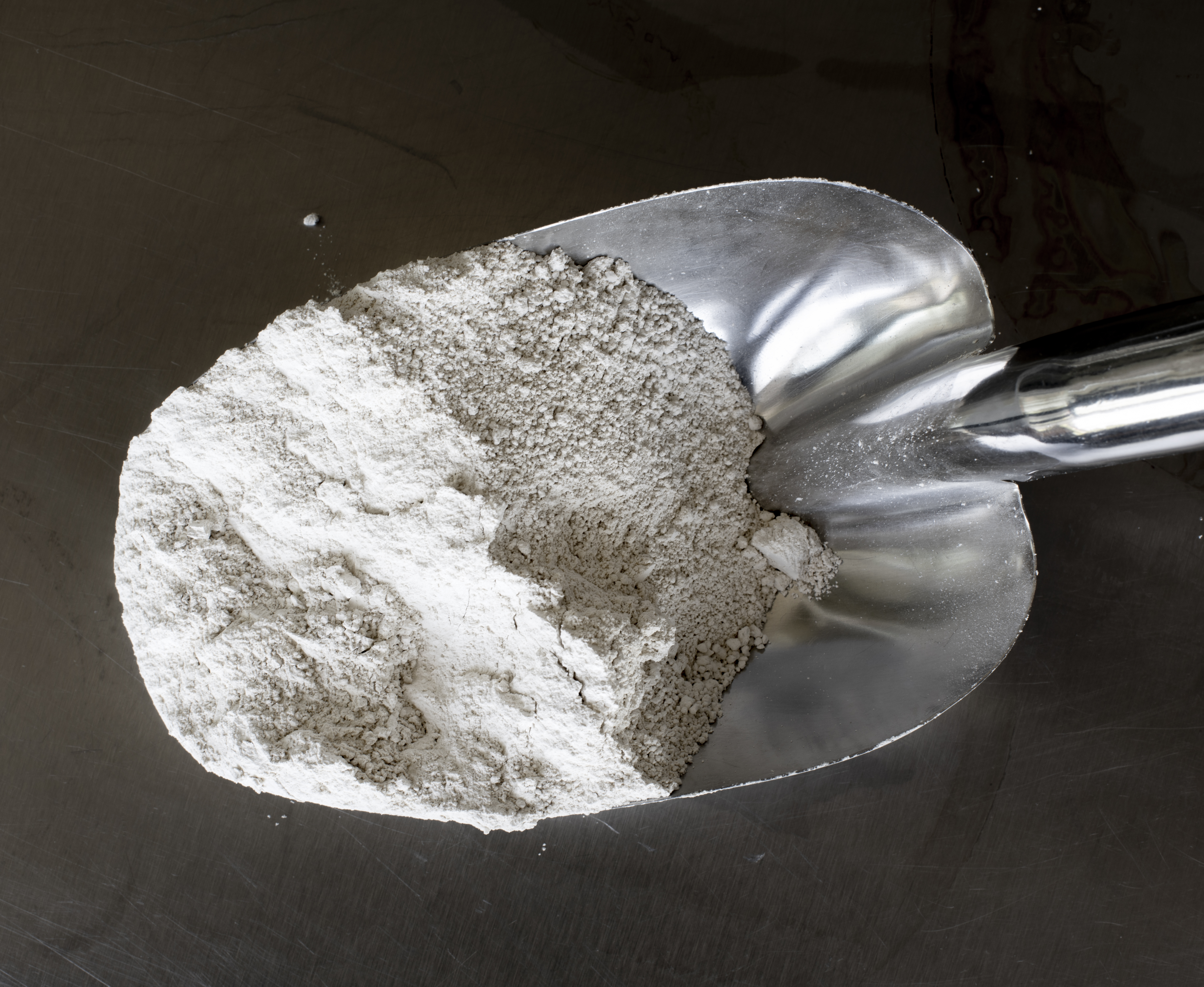
Effigy 9. Shovel of raw cloth dust.
Avoiding grit and other healthy studio practices
Clay and glazes are made upward essentially of silica-based raw materials and pose the largest health gamble when airborne. The particles are very tiny, not visible to the human eye, and therefore are an unseen risk over a long time and repeated exposure to the lungs. The worst side effects of long-term silica grit inhalation are pulmonary fibrosis (silicosis) and lung cancer.
Proficient and healthy studio practice includes tidiness and cleanliness. Floors and surfaces should e'er exist cleaned with a damp tool to suppress as much dust as possible. The largest most mutual overlooked hazards are muddy floors. As anxiety walk over dry clay and glaze debris, it is broken down, agitated, and becomes dust in the air repeatedly.
Ceramic materials should never be ingested. Wearing a mask or respirator for fine particulates is most important when mixing powdered raw materials, spraying coat, or grinding kiln shelves, as in these cases the materials can exist even visibly airborne as dust.
Also, to avert dust, bisque ware should never be sanded dry. The bisque ceramic slice should be fully wet, and saturated with water and sanded with wet-dry sandpaper.
Certain depression-burn surface applications should be used with caution, a vapor mask, and good ventilation, including china paint and luster.
Food safety
If you brand ceramic items for cooking or eating, check the food safe of the coat with the manufacturer or seller. The food safety of a functional ceramic dish depends on the glaze surface, dirt body and glaze maturity, and application. There are laboratories which will test the rubber of a glaze surface (such as EVIRA), just most mutual glaze defects are harmful over long-term use and are visible chop-chop. The interior surface that is used with nutrient or drinkable, should be glossy or semi-matte and unbroken. Matte glazes are often equanimous of tiny bubbles imperceivable to the naked eye. Croaky glazes should also not be used. These sort of breaks in the surface no longer contain glaze chemicals in a sealed glassy layer, but allow chemicals to leach out over fourth dimension, specially with acidic liquids like coffee or orangish juice.
If a cup is crazed, you will frequently see signs of liquid passing into the ceramic body from the inside through the exterior or human foot and eventually staining. A simple at-abode test can exist washed with a 10% citric acid solution for one week or using even a slice of lemon. If the acid is leaching through the glaze, there will be a alter in the color quality of the glaze over even ane twenty-four hour period. This ways the coat is cleaved, materials from the glaze tin can leach into food and drinkable, nutrient and drinkable can be trapped in the glaze layer creating mold over time, and the piece is therefore unsuitable for use with food.
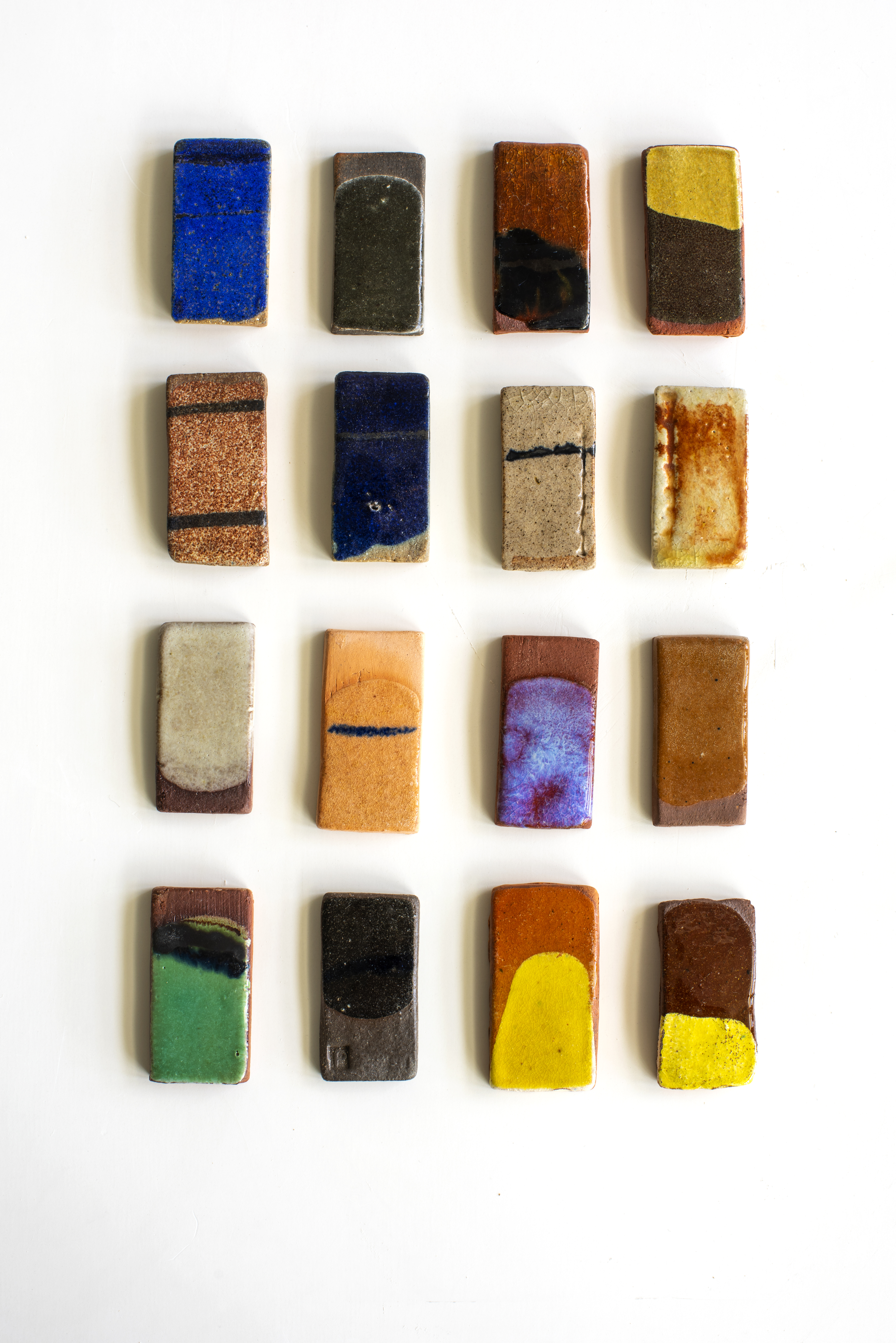
Figure x. Dissimilar coat surface qualities.
Most metal oxides are hazardous to ingestion. This ways they should be processed with actress caution while mixing and disposing of them. Chancy waste that goes into the sink can eventually enter groundwater and crusade larger pollution. Such every bit at Aalto University, any glaze material that is chancy, or completely unknown should be treated as hazardous, and put into the hazardous waste drum in the glazing area. This metal pulsate, when filled, is disposed of by a waste management company. Below in the Sustainability section, there are dissimilar methods explained to recycle personal hazardous waste that are more than cost constructive and ecologically minded. Every bit discussed in the first Ceramic materials section under Metallic Oxides, the most common chancy material compounds to exist used with caution are: cobalt, copper, chrome, nickel, barium, and manganese (firing fumes).
Materials and recipes using lead, uranium, and cadmium are no longer used due to their toxicity.
Please annotation! Any materials brought from outside into the academy setting must be approved past the studio primary.
K/SDS safety sheets
MSDS or SDS or material safety information sheets are of import documents provided upon request past a textile supplier or manufacturer for ceramic raw materials, clay, glaze, etc., to provide data on hazard, contents, and rubber. The exact requirements vary from each country, but the information beneath is virtually common for ceramic materials.
MSDS include post-obit information of a product or a raw-material:
- identification and utilise
- hazardous ingredients
- reactivity information
- toxicology properties
- preventative measures
- first assistance measures
- engagement and who has prepared the MSDS
(Spectrum Glazes, north.d.)
For samples, one can visit https://www.spectrumglazes.com/msds.html to view hundreds of MSDS for Spectrum products. This is an essential certificate for transparency of materials that are otherwise completely mysterious. The Finnish Safety and Chemicals Agency discusses these safety data sheets as well on their website https://tukes.fi/en/chemicals/reach/safety-data-sheet.
Plaster
Plaster should be treated the aforementioned as whatever other dry ceramic material, as prolonged inhalation can cause asthma (encounter department higher up). When measuring dry plaster, a mask should always be used in addition to ventilation. All plaster pieces should be cleaned from the working area and placed into the trash. Plaster on the footing will be stepped on and suspended in the air every bit grit when broken down. Plaster should never go down the sink, every bit it clogs the drains over time. Surplus plaster is ever emptied in
If making a plaster mold of a body office, information technology requires actress caution, and a professional should be consulted. Liquid plaster should not be used immediately against the peel, as the plaster becomes hot during the chemical reaction of its setting and hardening and can fire the skin. Also, a body role, such equally a hand, tin become stuck in a solid, stone-like slice of plaster which tin can only be cleaved open up by forcefulness. Plaster should never become downward the sink, equally it clogs the drains over time. Excess plaster is emptied from the bucket into a defended container, never rinsed out down the bleed.
Studio Equipment
Whatever machine that spins should exist used with hair tied back and without wearing apparel with strings or other parts that tin can be caught. Machines, such equally mixers and blenders, should always be turned off or unplugged when cleaning or non in use.
Some studio equipment is heavy and in multiple pieces, such as banding wheels and plaster molds. Always band/strap molds together before moving and hold banding wheels by the base of operations, as the bottom tin autumn out of the top. This will avoid dropping heavy things on your toes.
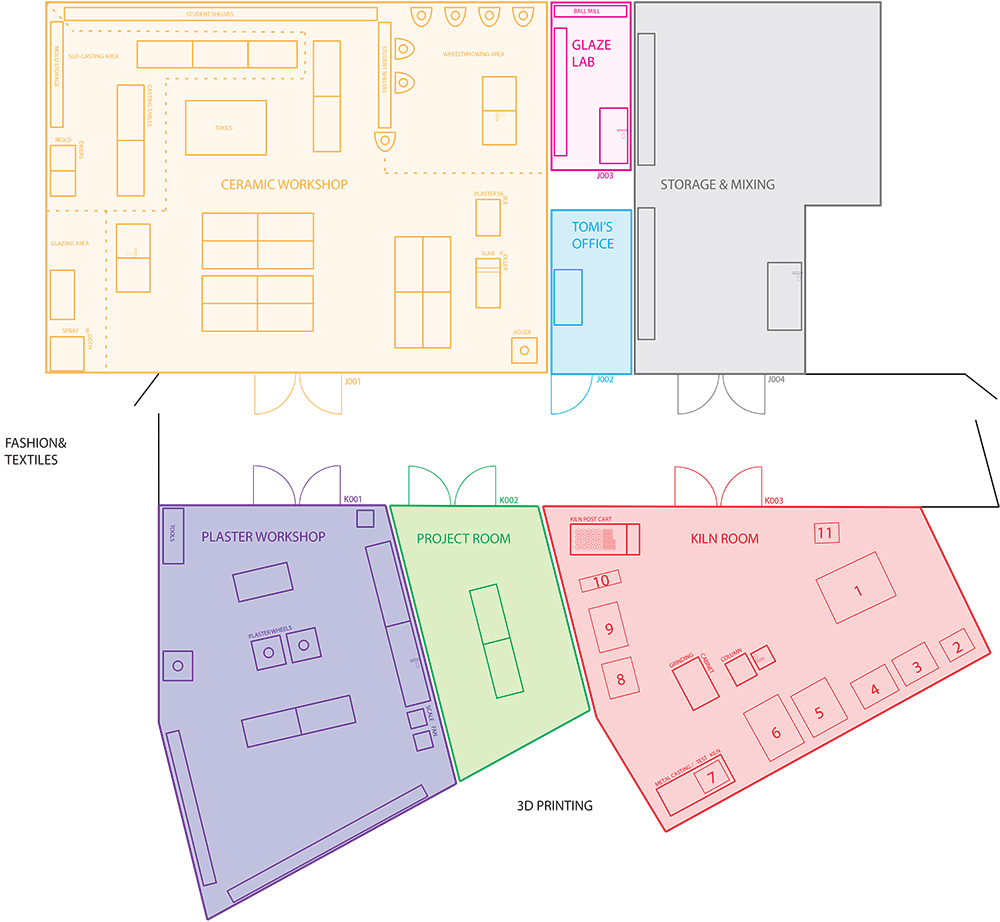
Figure 11. Aalto University ceramic workshop layout. The equipment has been organized in the space to create different areas for different tasks, such equally plaster work, firing, clay work, glazing and slip-casting.
Sustainability
Individual potters have traditionally kept frugal and sustainable practices apropos material waste product, h2o use, and fuel apply. For sustainable purposes, it is functional practise to use low and mid temperature clay every bit opposed to using the near refined high-fire clay, eastward.g. porcelain. This reduces the free energy needed for firing and opens up more local alternatives for materials, since at that place is no major source of the fine materials used for porcelain locally.
Information technology is mutual practice that rinsing and collection systems are used in various technological forms in ceramic studios, since the clay will clog drains, h2o costs money, and the nerveless cloth can be used once more. One of the great things almost dirt is that it tin can be reused infinitely before it is fired and undergoes chemic change.
Recycling Dirt
Ceramicists are in the habit of recycling all their clay scraps to be rehydrated into newly workable dirt.
Basic manner to recycle plastic clay:
1. Break clay into small pieces in a bucket
2. Let it become bone dry
3. Make full the bucket with water to cover dirt pieces
4. Wait for the clay to become saturated, broken downward, and soft
v. Pour off any extra water
6. Manus mix or blend with a drill and mixing head
7. Spread clay slurry onto plaster slabs for drying
viii. Flip the clay when the lesser has dried a flake and get plastic
9. Wedge clay once it is no longer wet or glace
ten. If clay is still too wet, information technology can be made into modest arches, left to dry, and wedged again
For very large batches of recycling, a pug mill is suggested, which tin mix, recycle, and de-air dirt of different wetness at the same time.
A like process can exist used for casting-sideslip. Modest bone-dry pieces tin be added to dry out raw materials when mixing fresh casting slip. A rule of thumb is to non use more than ½ of recycled casting slip textile in a batch, equally too much recycled casting slip can cause more interior casting surface defects. For instance: 25kg new raw materials + 25 kg recycled casting slip + 20-25 liters water + 80 one thousand Dispex.
Recycling Glaze
Glaze waste product, containing the most hazardous minerals for ground water, is oftentimes mixed into a new random glaze, or into the clay of a different product. This manner, the colour from this waste can be used and contained in an artifact rather than becoming contaminated waste. Often in the studios, at that place is besides much waste to process and it is collected over fourth dimension in a container for hazardous waste material. Below are some alternate examples of projects and research into processing hazardous ceramic waste and moving towards a more sustainable ceramics culture.
References
Bloomfield, Fifty. (2017). Science for Potters [Excerpt]. American Ceramic Society. https://ceramicartsnetwork.org/daily/firing-techniques/electric-kiln-firing/firing-clay-lowdown-ceramic-firing-process/
Finnish Prophylactic and Chemicals Bureau, Tukes. (n.d.). Safety Data Sheet. Retrieved 3.12.2020 from https://tukes.fi/en/chemicals/reach/rubber-data-sail
Frenzel, H. (2020, October 26). How to fire a gas kiln efficiently: perfect combustion in a gas kiln. Ceramic Arts Network Daily. Retrieved 30.11.2020 from https://ceramicartsnetwork.org/daily/clay-tools/ceramic-kilns/fire-gas-kiln-efficiently/
Galloway, J. (n.d.). Chemicals: Use and Disposal. Retrieved 30.11.2020 from
http://ceramicsfieldguide.org/chapter-5/chemicals-employ-and-disposal/?fbclid=IwAR1q3vBS1AHtLFJj-doRlEM6ojsQtXkDCkizEReb2faNlUcNWdWR90S4KuQ
Gebhart, T. (2020, November 27). All almost pyrometric cones. Ceramic Arts Network Daily. Retrieved November 30, 2020, from https://ceramicartsnetwork.org/daily/ceramic-supplies/ceramic-raw-materials/all-well-nigh-pyrometric-cones/
Hansen, T. (n.d.) Dunting. Retrieved thirty.eleven.2020 from https://digitalfire.com/glossary/dunting
Hansen, T. (n.d.) Raku. Retrieved xxx.xi.2020 from https://digitalfire.com/glossary/75
Hansen, T. (n.d.) Reduction Firing. Retrieved 30.11.2020 from https://digitalfire.com/glossary/reduction+firing
Health & Safety. (north.d.) Botz Glasuren. Retrieved 3.12.2020 from https://www.botz-glasuren.de/en/gesundheit-sicherheit-sdb
Keracomp OY. (2020). Keracomp OY. Retrieved 18.12.2020 from https://keracomp.fi/keracomp-oy/
KeraSil Oy. (n.d.) KeraSil. Retrieved eighteen.12.2020 from https://www.kerasil.fi/
Levin, South. (2017). Wadding for Wood Firing. Retrieved 12.12.2020 from https://ceramicartsnetwork.org/daily/firing-techniques/wood-kiln-firing/wadding-for-woods-firing/
Spectrum Glazes. (2020). Cloth Data Safety Sheets. Retrieved three.12.2020 from https://www.spectrumglazes.com/msds.html
Murphy, East. (2006). What is Soda Firing? http://potteryblog.com/tag/hydrochloric-acid/.
Types of firing: oxidation, reduction, salt, forest, raku. (n.d.) Retrieved 30.11.2020 from https://bigceramicstore.com/pages/info-ceramics-types-of-firing#:~:text=Reduction%20firing%20is%20typically%20done,the%20glazes%20during%20glaze%20maturation.&text=The%20atmosphere%20allows%20pieces%20to%20get%20a%20glazed%20like%20finish%20without%20glazes
Pelkonen, T. and McPartlan, Chiliad. (2020) Ceramics Workshop. [Unpublished teaching fabric] Aalto University.
Schimik, M. (2018). Sustainability in the Ceramics Studio. Retrieved 30.eleven.2020 from
https://ceramicartsnetwork.org/daily/ceramic-supplies/ceramic-raw-materials/sustainability-ceramic-studio/
Turvallisuus- ja kemikaalivirasto, Tukes. (eastward.p.). Käyttöturvallisuustiedote. Haettu iii.12.2020 https://tukes.fi/kemikaalit/accomplish/kayttoturvallisuustiedote#237668c2.
Zakin, R. and Bartolovic, F. (2015). Electric Kiln Ceramics [Excerpt]. American Ceramic Guild.
https://ceramicartsnetwork.org/daily/firing-techniques/electric-kiln-firing/introduction-electric-pottery-kilns/
Zakin, R. and Bartolovic, F. (2015). Electric Kiln Ceramics [Extract]. American Ceramic Society. https://ceramicartsnetwork.org/daily/firing-techniques/electrical-kiln-firing/quartz-inversion-and-other-important-stages-of-firing-pottery/
Images and illustrations
Effigy 1. Wikimedia Commons. (2005). Anagama Kiln. [Diagram]. https://commons.wikimedia.org/wiki/File:Anagama_kiln.svg .
Figure two. Halko, Due south. (2014). Woodfired teapot. [Photo].
Figure three. Franke, D.I. (2014). Raku. [Photograph]. https://commons.wikimedia.org/wiki/File:Raku_15.06.2014_14-28-12.jpg.
Figure 4. McPartlan, 1000. (2020). Kiln Control Pad. [Diagram]. [Unpublished teaching textile] Aalto
University.
Effigy 5. Kerimov, Due north. (2020). Kiln Loading. [Illustration].
Figure six. Haynes, C. (2007). Filled Kiln. [Photograph]. https://commons.wikimedia.org/wiki/File:Filled-kiln.jpg.
Figure seven. Palmer, A.T. (1941). This is the exit stop of a pug factory which prepares the plastic clays used in forming various articles of chinaware. [Photo]. U.s. Library of Congress. https://picryl.com/media/this-is-the-exit-end-of-a-pug-mill-which-prepares-the-plastic-clays-used-in.
Figure 8. Latva-Somppi, A. Spraying glaze. (2020). [Photo].
Figure ix. Kinnunen, A. (2020). Ceramic raw materials. [Photo].
Figure 10. Kinnunen, A. (2020). Glaze examples. [Photograph].
Figure 11. McPartlan, M. (2020). Ceramic studio. [Illustration]
Source: https://openlearning.aalto.fi/course/view.php?id=110§ion=15&lang=fi
0 Response to "How to Get the Perfect Profile by Sledging Plaster Ceramic Arts Network"
Post a Comment